Skip to content




Regenerative Microneedling (PDGF) in Pittsburgh, PA
Rebuild Collagen Faster with Your Own Growth Factors
Regenerative microneedling in Pittsburgh combines traditional microneedling with platelet-derived growth factor (PDGF) to boost collagen production beyond what needling alone typically achieves. Aestique Medispa offers this growth factor microneedling under the same physician-reviewed approach used across every treatment we provide, with Dr. Theodore A. Lazzaro determining candidacy and depth based on your specific skin concern. Whether you’re exploring PDGF microneedling for acne scarring, pursuing broader regenerative skin rejuvenation, or considering this treatment after outgrowing standard needling results, it was built to go a step further.
What is Regenerative Microneedling?
Regenerative microneedling uses the same fine, sterile needles as standard microneedling, creating controlled microchannels that prompt the skin to heal itself. What sets it apart is the addition of growth factors drawn from your own blood, applied directly to the skin during treatment to accelerate and strengthen that healing response. As skin ages, natural collagen production slows, and existing fibers break down faster than the body replaces them, which is part of why standard microneedling alone can plateau for patients with more advanced scarring or texture loss. The combination is designed to produce more collagen remodeling than needling alone would.
How PDGF Growth Factors Work
A simple blood draw kicks off platelet-derived growth factor treatment , with the sample spun in a centrifuge to concentrate the platelets that carry these growth signals. Growth factors act as messengers that tell surrounding cells to repair and regenerate, which is why applying them during microneedling gives the skin extra instructions right at the moment it’s already primed to heal. Clinical research on regenerative skin treatment continues to build, but the underlying mechanism, using the body’s own repair signals rather than introducing anything foreign, is part of why this approach has gained traction among providers looking for more than surface-level results.
Benefits of Regenerative Microneedling
This treatment appeals to patients who’ve tried standard microneedling and want a more pronounced result from this advanced microneedling approach.
- Combines mechanical needling with growth factor infusion for a stronger collagen response
- Often shortens visible healing time compared to needling alone
- Supports more noticeable acne scar remodeling over a treatment series
- Works as an anti-aging microneedling option for fine lines and overall texture
- Uses your own blood-derived growth factors rather than any synthetic additives
What Skin Concerns Can It Treat?
Acne Scarring
Acne scar microneedling with PDGF added tends to show more pronounced improvement in scar depth and texture than needling alone, particularly for textured, pitted scarring.
Fine Lines & Texture
As an anti-aging microneedling option, the added growth factors support smoother texture and softer fine lines as new collagen builds in over the following weeks.
Overall Skin Rejuvenation
Patients focused on general skin resurfacing treatment , tone, and radiance often choose this option when standard microneedling hasn’t delivered the depth of change they’re after.
Regenerative vs Traditional Microneedling
Collagen stimulation | Moderate, from needle injury alone | Enhanced, needle injury plus growth factor signaling |
Healing time | Typically 2-3 days of redness | Often shorter, thanks to added growth factors |
Downtime | Minimal | Minimal, similar to standard microneedling |
Sessions typically needed | 4-6 for noticeable change | 3-4, often with more pronounced results per session |
Best suited for | Mild texture, early prevention | Acne scarring, more advanced texture concerns |
What Happens During Treatment?
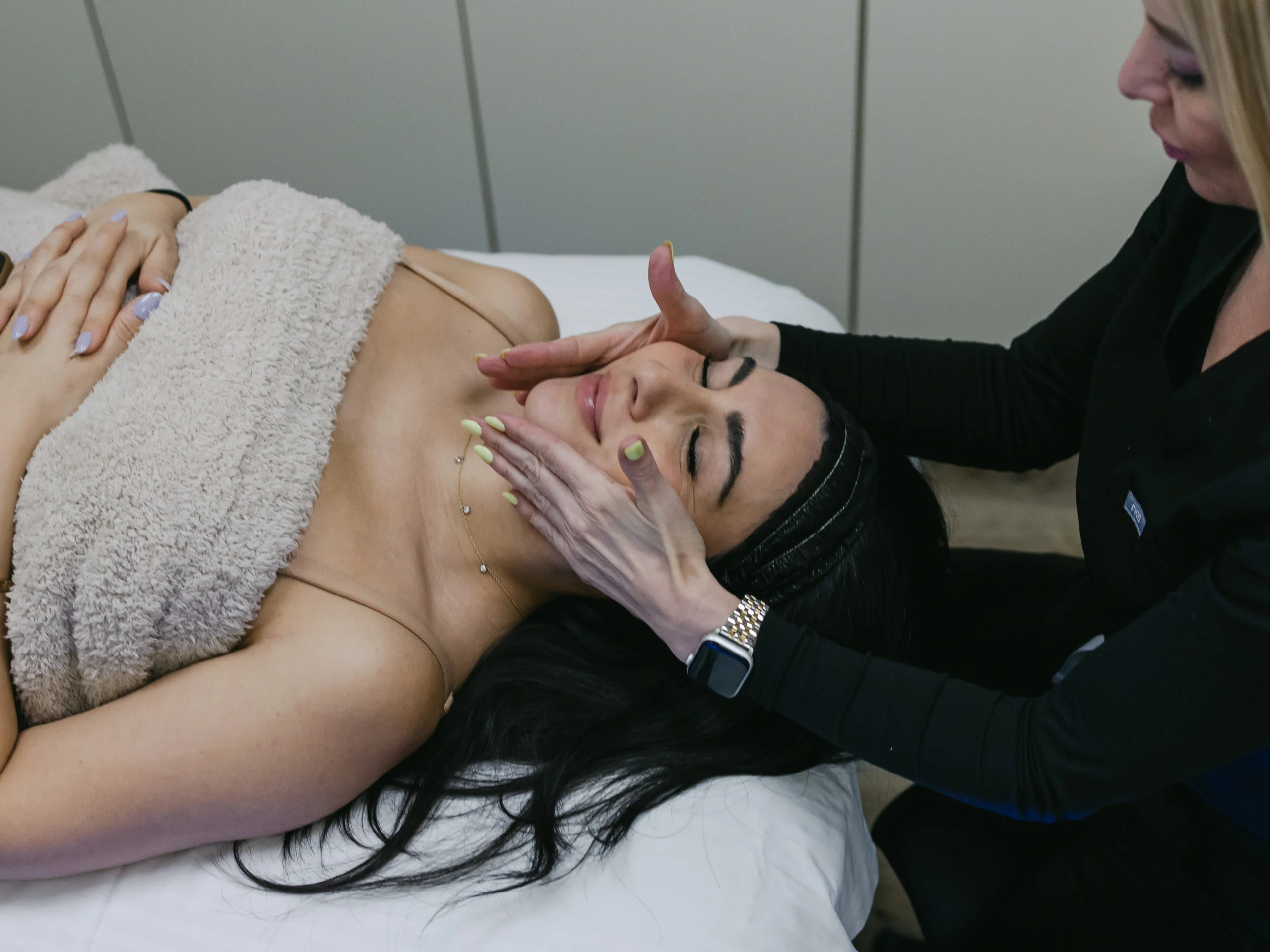
Your visit starts with a routine blood draw, processed in-office to isolate the growth factor concentrate while your provider preps the treatment area. The skin is treated with a microneedling device set to a customized depth, while PDGF concentrate is applied throughout and after the pass for maximum absorption. Most sessions take about forty-five minutes to an hour, including the blood processing time.
Recovery & Aftercare
Before Treatment
- Avoid retinoids and exfoliating products for several days prior
- Arrive with clean, makeup-free skin
After Treatment
- A mild sunburn-like redness is normal for one to three days after treatment
- Keep the treated area out of direct sunlight and avoid tanning for at least 1–2 weeks
- Avoid makeup for 24 hours while the skin begins healing
Results Timeline
Early smoothing often appears within the first week, with more noticeable improvement in scarring and texture over the following 1 to 2 months as new collagen matures. For acne scarring or more advanced texture concerns, most patients go through three to four sessions scheduled four to six weeks apart. A maintenance session every few months helps sustain results once the initial series is complete.
Why Choose Aestique Medispa
Growth factor concentration and microneedling depth aren’t standardized across every patient at Aestique Medispa. Dr. Theodore A. Lazzaro adjusts both based on your specific scarring pattern and skin thickness, since a generic regenerative facial treatment can underdeliver for deeper scarring or overtreat more sensitive skin.
Which Location Is Right for You?
Aestique Medispa offers regenerative microneedling in Pittsburgh at all three of our Pennsylvania locations, so you can pick whichever fits your schedule best.
- Shadyside. 5989 Centre Avenue, Pittsburgh, PA 15206. 412.345.0061. Our busiest office for PDGF microneedling in Shadyside, closest to the city.
- Wexford. 101 Fowler Road, Warrendale, PA 15086. 412.699.7682. A convenient option for growth factor microneedling in Wexford if you’d rather skip the commute downtown.
- Greensburg. 169 Aesthetic Way, Greensburg, PA 15601. 724.832.8266. Serving patients throughout Westmoreland County.
Not sure which office fits your schedule? Email spa@aestique.com and our team at Aestique Medispa will help you find availability across all three locations.
FAQs
What is regenerative microneedling?
It’s traditional microneedling combined with platelet-derived growth factor to enhance the skin’s natural healing and collagen production.
What does PDGF do in microneedling?
PDGF delivers growth signals directly to the treated skin, supporting faster, more robust collagen remodeling than needling alone.
Is regenerative microneedling better than traditional microneedling?
It often produces more pronounced results for scarring and texture, though standard microneedling remains a good option for milder concerns or prevention.
How many regenerative microneedling sessions are needed?
Most patients complete three to four sessions scheduled four to six weeks apart, depending on the depth of scarring or texture concern.
How long do regenerative microneedling results last?
Results build over one to two months and are typically maintained with a touch-up session every few months.
Schedule Your Regenerative Microneedling Consultation
Ready to go beyond standard microneedling with your own growth factors? Meet with an Aestique Medispa provider at our Shadyside, Wexford, or Greensburg office to see if regenerative microneedling is the right fit for your skin.
Schedule Your Consultation